Rules & Disposal
What Can Go In a Dumpster in PA?
A Reading, PA guide to what's allowed and prohibited in a roll-off dumpster under Pennsylvania rules, plus loading tips and PA DEP guidance. Call (484) 334-4904.
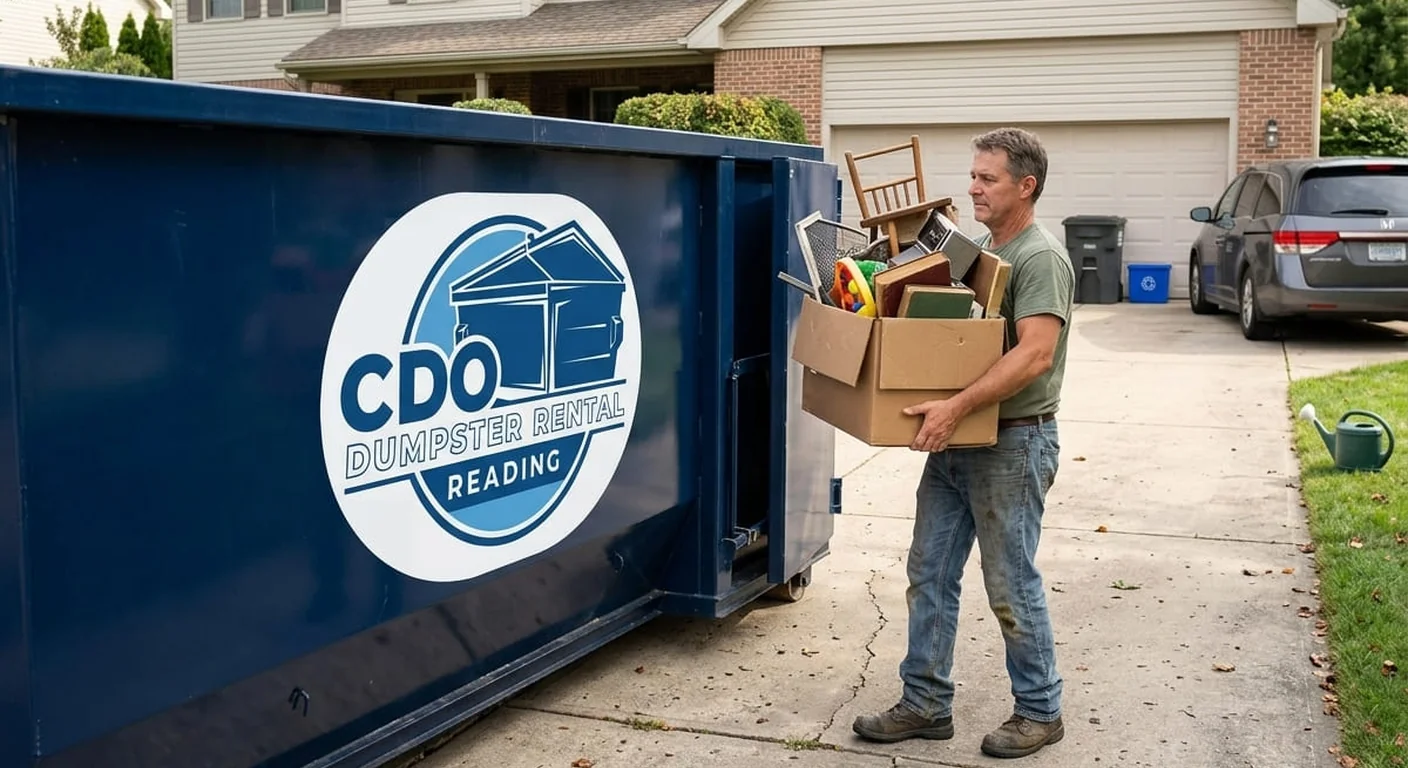
If you've rented a roll-off before, you already know the question that comes up on almost every job: "can this go in the dumpster?" Whether you're gutting a rowhome on the slopes of Mount Penn, clearing out a relative's estate in Wyomissing, or hauling roofing tear-off after a hailstorm rolled through Berks County, the answer isn't always obvious. Pennsylvania has real rules about what can be thrown away and how, and a roll-off dumpster isn't a free pass to toss whatever you want into it. This guide walks through what's accepted, what's prohibited, why Pennsylvania regulates it the way it does, and how to load your dumpster so it gets picked up without a hassle. If you'd rather just call and ask about your specific job, our team at CDO Dumpster Rental Reading is happy to walk through it — reach us at (484) 334-4904.
What You Can Toss in a Roll-Off Dumpster
Most of what comes out of a renovation, cleanout, or yard project in Reading and the surrounding townships is completely fine to load into a standard roll-off. Here's what we accept without any special handling:
Construction and renovation debris
Reading's housing stock runs the gamut from dense brick rowhomes climbing Mount Penn and Neversink Mountain to older stone farmhouses out in the county and newer builds in Wyomissing, Sinking Spring, and Spring Township. Whatever the vintage, the debris that comes out during a remodel is generally welcome in the dumpster: lumber and framing scraps, drywall, plaster, tile and grout, subfloor and finished flooring (hardwood, laminate, vinyl, carpet), cabinetry, doors, and trim. If you're pulling out old plumbing fixtures or ripping up a bathroom in one of the city's older homes, that debris is accepted too.
Furniture and household clutter
Couches, mattresses, dressers, bed frames, and the general accumulation that fills a basement or attic over the years are all fine. This is the category that comes up most during a whole-home cleanout or when a family is clearing out a parent's or grandparent's house after decades of accumulation — see our estate cleanout checklist for a room-by-room approach.
Yard waste and storm debris
Branches, brush, grass clippings, leaves, and the storm debris that piles up after a nor'easter or a heavy spring thaw are accepted in a roll-off. Berks County sees genuine winter weather — snow load on trees and the freeze-thaw cycle that snaps limbs every February and March generate more yard debris here than in a milder climate, and a dumpster is often the fastest way to clear it before the next storm rolls through.
Roofing shingles
Tear-off shingles, underlayment, and flashing are accepted, though because shingles are heavy and dense, roofing jobs usually call for a specific size and weight plan rather than just "the biggest dumpster available." Our roofing dumpster rental page covers sizing for common roof pitches and square footage.
Small appliances
Toasters, microwaves, small kitchen appliances, and similar items are fine in the dumpster. Larger appliances that use refrigerants — refrigerators, freezers, window air conditioners — need to be called out ahead of time so we can make sure Freon is handled correctly; just mention it when you book.
What's Prohibited in a Pennsylvania Dumpster (and Why)
Some materials can't go in a roll-off no matter how the job is going, and it's not an arbitrary rule on our end — it's how Pennsylvania's solid waste and hazardous waste regulations work. Landfills and transfer stations are permitted facilities with strict limits on what they can legally accept, and materials that are flammable, corrosive, reactive, or that can leach into soil and groundwater are handled through separate, specialized disposal channels rather than a general roll-off.
Here's what stays out of the dumpster:
- Paint and paint thinner — liquid paint is treated as hazardous waste in most jurisdictions; dried, empty cans are typically fine, but full or liquid paint is not.
- Solvents and chemical strippers — flammable and often corrosive.
- Motor oil and other oils — can contaminate soil and water and usually has a dedicated recycling stream.
- Tires — most landfills won't take whole tires; they typically need a tire retailer or a dedicated tire-recycling drop-off.
- Batteries — car batteries, lithium-ion batteries, and other batteries contain corrosive or reactive materials and need separate handling.
- Hazardous household chemicals — pesticides, herbicides, pool chemicals, and similar products.
- Propane tanks and gas cylinders — pressurized and combustible, a serious safety hazard in a loaded dumpster or a collection truck.
- Medical waste — needles, sharps, and biohazard materials require regulated medical waste disposal, not a roll-off.
If you're not sure whether something in your pile qualifies, ask before it goes in — it's a lot easier to sort it out ahead of time than after the dumpster is loaded and scheduled for pickup. Call us at (484) 334-4904 and describe what you're working with.
Accepted vs. Prohibited: Quick Reference
| Accepted in the Dumpster | Prohibited — Needs Separate Disposal |
|---|---|
| Wood, lumber, framing scraps | Paint and paint thinner (liquid) |
| Drywall and plaster | Solvents and chemical strippers |
| Tile, grout, flooring | Motor oil and other oils |
| Furniture and household clutter | Tires |
| Yard clippings and branches | Batteries |
| Roofing shingles | Hazardous household chemicals |
| Small appliances | Propane tanks and gas cylinders |
| Cabinetry, doors, trim | Medical waste and sharps |
PA DEP's Role in Regulating What Gets Thrown Away
Waste disposal in Pennsylvania is regulated at the state level by the Pennsylvania Department of Environmental Protection (PA DEP), which oversees solid waste, recycling, and landfill operations across the Commonwealth. PA DEP's waste programs set the rules that permitted landfills and transfer stations in Berks County and the rest of the state operate under, including which materials require special handling rather than standard disposal. That's the regulatory backbone behind the accepted and prohibited lists above — it's not a preference of ours, it's what the facilities we work with are legally allowed to take.
On the construction and demolition side specifically, the U.S. EPA's guidance on construction and demolition materials outlines how debris like concrete, wood, drywall, and roofing is typically managed and, where possible, recycled rather than landfilled — something worth knowing if you're planning a larger renovation or demolition project and want to understand how your debris stream gets sorted downstream. For household hazardous waste and electronics that can't go in a standard dumpster, Berks County periodically runs collection events — worth checking before you accumulate a garage full of old paint cans and propane tanks.
Loading Your Dumpster the Right Way
Once you know what's going in, loading it correctly matters almost as much as the sorting does. A few habits make pickup faster and safer for everyone:
- Spread debris evenly across the floor of the container. Dumping everything in one corner wastes usable space and can make the load unstable when the truck tilts it for pickup.
- Break down bulky items where you can. Flattened boxes, disassembled furniture, and cut-down lumber take up a fraction of the space of intact pieces.
- Load heavy, dense material first and low. Shingles, tile, and concrete debris settle best on the bottom, with lighter bulky items like furniture and clutter stacked on top.
- Never exceed the top rim. Material piled above the fill line — often called "topping off" — isn't legal for the truck to haul on public roads and creates a real risk of debris falling out in transit. Keep the load level with or below the rim.
- Keep prohibited items out from the start. Sorting as you go is far easier than pulling something out of a fully loaded container later.
If you're working out how much dumpster you actually need before you start loading, our dumpster size guide breaks down the 10, 15, 20, 30, and 40 yard options by project type, and our sizes page has the full lineup.
Special Cases We See Often Around Reading and Berks County
A few situations come up often enough locally that they're worth calling out directly. Rowhome renovations in the city itself frequently turn up old plaster-and-lath walls, horsehair plaster dust, and sometimes decades-old flooring layered on top of each other — all of it is fine for the dumpster, but it tends to be heavier than drywall debris of the same volume, so we often talk through weight expectations up front. Roofing tear-offs after winter storm damage are common too, since heavy snow load and ice damming are real concerns on Reading's older roofs; see our roofing dumpster rental page for sizing guidance specific to shingle weight.
Demolition and heavy debris projects — knocking down an old shed, garage, or outbuilding on a county property — generate concrete, block, and masonry that's accepted but needs a size and weight plan of its own; our concrete and heavy debris and demolition debris pages cover that in more detail. And if a project turns up items you're not sure about — old paint cans in a barn, a propane tank from a grill, a stack of half-full solvent containers — it's worth setting them aside and calling us before the dumpster arrives so we can point you toward the right disposal option instead of leaving them out of the load altogether.
Yard Waste, Junk Removal, and What Falls In Between
Not every project is a renovation. If you're just clearing years of accumulated clutter out of a garage or basement, our junk removal service covers that without requiring a full construction-style debris sort. Seasonal yard cleanup — storm-downed branches, a big fall leaf haul, or clearing brush ahead of a spring planting — falls under yard waste removal. Either way, the accepted-materials list above still applies: yard debris and household clutter are fine, chemicals and hazardous materials are not.
Placement, Permits, and Keeping It Simple
Most residential dumpster rentals in Reading and Berks County sit on a driveway or private lot and don't require any permit at all. If a project needs the container placed on a public street instead, a temporary permit may be required — our dumpster permits guide walks through when that applies and who to contact, whether that's the City of Reading, your borough or township, or Berks County directly. For recycling and disposal options beyond what a standard dumpster covers, our Berks County recycling and disposal guide rounds up the local resources.
When You're Not Sure, Just Ask
The line between "accepted" and "prohibited" isn't always intuitive — an empty propane tank looks harmless, a can of old paint looks like garbage, and a pile of shingles looks like it should just go on top of everything else. Rather than guess, call our team before your rental arrives and describe what you're dealing with. We book flat-rate roll-off rentals — delivery, pickup, and disposal in one price, no hidden fees — sized for residential, commercial, construction, and cleanout jobs across Reading, Wyomissing, West Reading, Shillington, Sinking Spring, and the rest of Berks County. Call (484) 334-4904 and we'll help you figure out the right size and confirm what can and can't go in before the truck ever shows up.
Need a container in Reading or anywhere in Berks County? Call (484) 334-4904 and describe the job. We will name the size, the flat rate and a delivery slot — often the same day. No forms, no waiting on an email.