Contractors
Construction Debris Disposal Reading PA
How Reading and Berks County contractors size, schedule and stay compliant when disposing of C&D debris. Practical guidance on weight, volume, swaps and PA DEP rules.
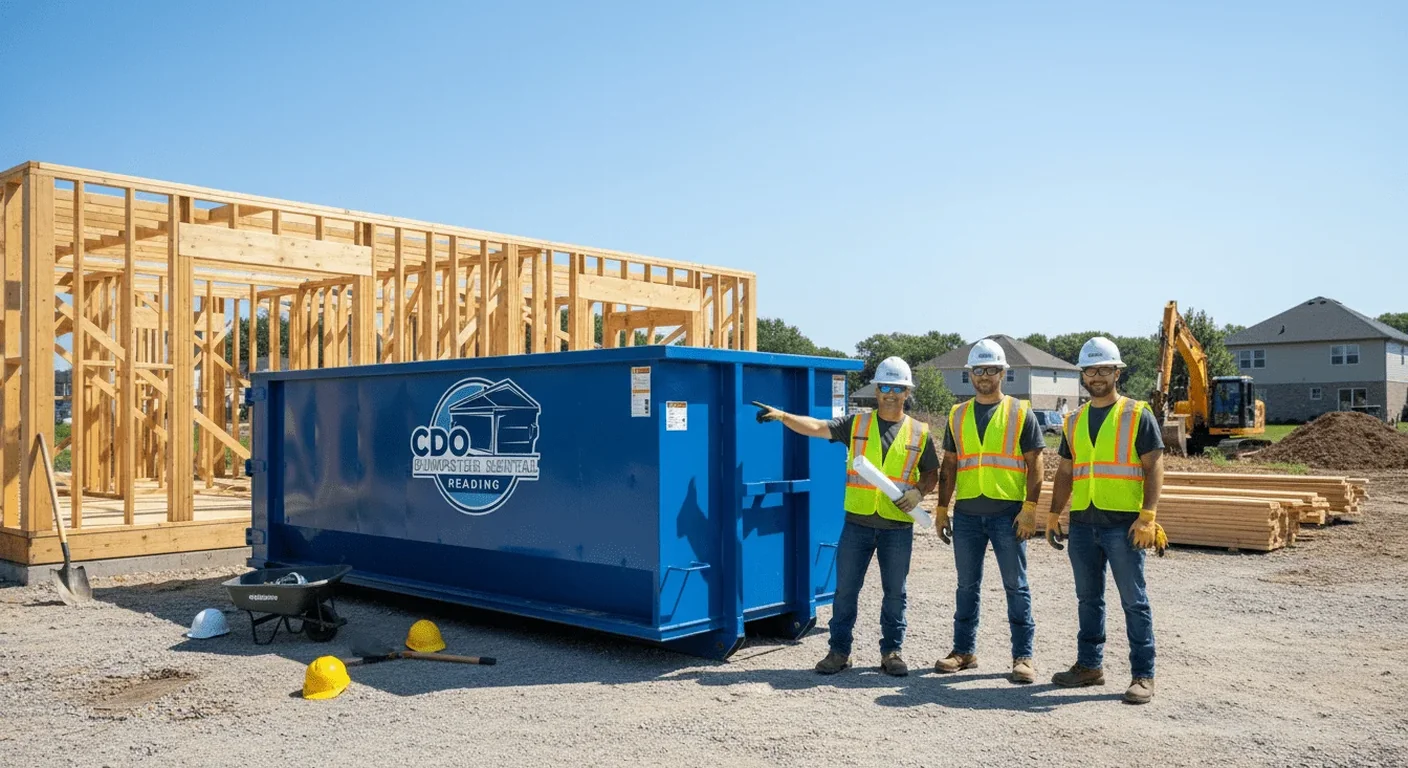
Every renovation, teardown or new build in Berks County produces a pile of construction and demolition (C&D) debris that has to go somewhere — and getting that logistics decision wrong costs a job real time and real money. Overfill a dumpster with shingles or concrete and you'll pay for a second haul. Undersize it for a kitchen gut job and your crew is stepping over drywall scraps for two extra days. This guide walks Reading and Berks County contractors through sizing a roll-off for each phase of a job, understanding why dense materials behave differently than bulky ones, and keeping a job site moving with scheduled swaps instead of surprise pickups.
What Counts as Construction & Demolition Debris
C&D debris covers the material generated by building, renovating or tearing down a structure. On a typical Reading-area job that includes framing lumber, drywall, plaster and lath (common in the older rowhomes climbing Mount Penn and Neversink Mountain), roofing shingles, siding, flooring, tile, concrete and masonry, brick, windows and doors, and mixed metal from fixtures, ductwork and flashing. It does not include household trash, food waste, or the items on any hazardous-materials list — paint, solvents, oils, tires, batteries, hazardous chemicals, propane tanks or gas cylinders, and medical waste stay out of any roll-off regardless of the job type.
Our construction dumpster rental service is built around exactly this mix of material, and if a project is specifically a teardown rather than a build-out, our demolition debris service and dumpsters are sized with that heavier, denser load in mind from the start.
Sizing a Dumpster to the Job Phase, Not Just the Job
The mistake we see most often on Reading and Berks County job sites is ordering one dumpster size for the entire project instead of matching the container to whatever phase is currently generating debris. A gut renovation produces very different debris in week one than it does in week four.
Demolition and teardown phase
Interior demo, framing removal and full structure teardown generate large volumes fast — old plaster and lath, full sheets of subfloor, cabinetry, and broken drywall. This phase usually calls for the largest containers we offer.
Rough-in and mid-build phase
Once framing, electrical, plumbing and HVAC rough-in are underway, debris slows to a steadier trickle of lumber offcuts, wire, conduit scrap and packaging. A mid-size container that gets swapped periodically usually outperforms one giant dumpster sitting half-empty for weeks.
Finish and punch-list phase
Drywall finishing, flooring, trim and final cleanup generate lighter, bulkier waste — packaging, cutoffs, and general job-site trash. A smaller container is often enough to close out the job.
| Job Phase | Typical Debris | Suggested Size | Notes |
|---|---|---|---|
| Full teardown / demolition | Framing, plaster, subfloor, mixed structural debris | 30 yard or 40 yard | Watch weight on concrete/brick-heavy tear-offs — see the note below |
| Room addition / gut renovation | Drywall, cabinetry, flooring, old fixtures | 20 yard or 30 yard | Most common size for whole-house interior work |
| Roof tear-off | Shingles, underlayment, flashing | 15 yard to 20 yard | Shingles are dense — size by weight, not just roof square footage |
| Rough-in / mid-build | Lumber offcuts, wire, conduit, packaging | 10 yard or 15 yard, swapped as needed | Good candidate for a scheduled swap cadence |
| Finish / punch-list | Trim scrap, packaging, general site trash | 10 yard or 15 yard | Usually the last container of the job |
If you're not sure where a specific job lands, our full dumpster size guide breaks down each container in more detail, and a call to (484) 334-4904 gets you a straight answer from someone who sizes jobs like yours every week.
Weight vs. Volume: Why Concrete, Brick and Shingles Break the Rules
Most people size a dumpster by picturing how much space debris takes up. That works fine for framing lumber and drywall, which are bulky but light. It falls apart for dense materials, where a container can be visually far from full and still be too heavy to legally or safely haul.
Concrete, brick, block, tile, and asphalt shingles are all dense-mass materials. A layer of broken concrete a foot deep can weigh more than an entire dumpster's worth of framing debris stacked to the rim. This is why heavy, dense debris is almost always handled in a dedicated container sized for weight rather than volume — our concrete & heavy debris service exists specifically for this, and roofing jobs get their own sizing logic covered in our roofing tear-off dumpster guide.
| Material | Behavior | Sizing Approach |
|---|---|---|
| Framing lumber, drywall, cabinetry | Bulky, light | Size by volume — fill to the rim |
| Asphalt shingles | Dense, deceptively heavy per square | Size by weight, keep the layer shallow |
| Concrete, brick, block, tile | Very dense, heavy in small volumes | Dedicated heavy-debris container, load thin and level |
| Mixed household/job clutter | Light, irregular shapes | Size by volume |
Two practical rules keep dense loads manageable: never mound heavy debris above the container's rim, and keep concrete, brick and shingles separated from bulky lightweight debris whenever you can, rather than mixing them into one load. Loading dense material flat and even across the floor of the container, rather than piling it in one corner, also matters for safe transport — our driver, Carlos, and the rest of the crew handle pickup, but even weight distribution on your end makes for a faster, safer swap.
Scheduling Swaps for Ongoing Jobs
A single-container approach works for a weekend cleanout. It does not work for a multi-week renovation or new build. On active jobs, we set up a swap schedule: once a container fills, we pull it, drop a fresh one in the same spot, and the job keeps moving without a work stoppage while your crew waits on disposal.
Our standard rental period is 7 days, with extensions available on request — that's a starting point, not a hard stop, and jobs that run long simply extend or move into a swap cadence instead. For a job with a known multi-phase timeline, it's worth calling ahead and mapping out roughly when each swap should land: after demo, again mid-rough-in, and once more heading into finish work. Planning swaps around phases, rather than reacting once a container is already overflowing, keeps the site safer and keeps debris from spilling past the rim, which matters both for site safety and for staying within legal load limits once the container is on the road.
For jobs on a public street rather than a private driveway or lot, a temporary placement permit may be required — confirm with the City of Reading, your local borough or township, or Berks County before delivery day. Our permit guide for Reading-area rentals covers what that process typically looks like. If the job involves any underground utility work as part of site prep or demolition, PA law requires a call to PA One Call (811) before digging, separate from any dumpster placement permit.
PA DEP's Role in C&D Disposal
Construction and demolition debris in Pennsylvania is regulated at the state level by the Pennsylvania Department of Environmental Protection (PA DEP), which oversees solid waste management, recycling and landfill operations statewide through its waste programs. PA DEP sets the rules for how C&D material is classified, transported and disposed of, and which facilities are permitted to accept it. As the contractor or property owner generating the debris, you're not expected to navigate PA DEP's permitting process yourself for a routine renovation or teardown — that's the job of the licensed hauler and the receiving facility — but it's worth knowing that the container sitting in your driveway is the first link in a regulated chain, which is part of why prohibited materials like paint, solvents, oils, batteries, and propane tanks can't go in with the rest of the load. Keeping those items separated protects the whole chain downstream, from our truck to the disposal facility.
Heavy loads also intersect with road and hauling rules enforced through the Pennsylvania Department of Transportation (PennDOT), which is another reason dense debris like concrete and brick gets its own sizing approach rather than being piled into whatever container is already on site — an overloaded roll-off isn't just a disposal problem, it's a road-legal one.
EPA's Sustainable Management Guidance
At the federal level, the U.S. Environmental Protection Agency maintains guidance on the sustainable management of construction and demolition materials, which frames C&D debris as a category worth diverting from landfills wherever practical, through source reduction, reuse and recycling of materials like concrete, wood, drywall, asphalt shingles and metal. For contractors, the practical version of that guidance often comes down to separating recyclable material streams when a job site allows for it: keeping clean wood separate from mixed debris, or setting aside metal scrap rather than burying it in a mixed load. It's not a requirement on most residential and small commercial jobs, but many Berks County contractors already do a version of it because clean, sorted loads move faster and simpler than deeply mixed ones. Our Berks County recycling and disposal guide goes into more detail on what can realistically be separated out on a typical job.
Site Realities: Reading Winters and Driveway Protection
Berks County gets real winters — freeze-thaw cycles, occasional nor'easter-strength snow, and driveways that go from frozen solid to soft and saturated within a single week of spring thaw. A loaded roll-off is heavy even before you add concrete or shingles, and placing one on a driveway during a freeze-thaw stretch is exactly when frost-heaved concrete or a soft, half-thawed asphalt surface is most likely to show wear. We place containers with that in mind, and our guide to protecting your driveway during delivery covers the placement details that matter most in cold-weather months.
Whether the job is in the city itself, out toward Wyomissing or Sinking Spring, or further out toward Boyertown or Kutztown, the same sizing and scheduling logic applies — see our full service area for the towns we cover across Berks County.
Getting the Right Container for Your Job
Every job is a little different, and the fastest way to land on the right size and swap schedule is a short phone call before delivery day rather than a guess based on square footage alone. Tell us the phase of work, the mix of debris (especially whether concrete, brick or shingles are involved), and roughly how long the job will run, and we'll size the container and set a swap plan around it. Call (484) 334-4904 to get your project scheduled — we deliver, we swap on your timeline, and one flat rate covers delivery, pickup and disposal with no hidden fees.
Need a container in Reading or anywhere in Berks County? Call (484) 334-4904 and describe the job. We will name the size, the flat rate and a delivery slot — often the same day. No forms, no waiting on an email.