Rules & Disposal
Berks County Recycling & Disposal Guide
A Reading, PA guide to curbside recycling, hazardous waste events, electronics and appliance recycling, and yard waste options across Berks County.
Renting a roll-off dumpster solves the big problem — the pile of debris that's too heavy, too bulky, or too mixed to bag up and haul yourself. But a full cleanout, remodel, or garage purge almost always turns up a second category of stuff: items that don't belong in a dumpster at all, and shouldn't go to a landfill if you have a better option. Berks County residents have real, working recycling and disposal channels for most of it — curbside programs run by the City of Reading and surrounding boroughs, county-level hazardous waste and electronics events, and private scrap and appliance recyclers. This guide walks through what belongs in curbside recycling, what needs a hazardous-waste collection event, what electronics and appliance recycling looks like locally, where yard waste and composting fit in, and how construction debris fits into the picture too — so your dumpster rental handles only what it should, and everything else finds a proper home instead of taking up landfill space unnecessarily.
Why "Recycling vs. Dumpster" Actually Matters Here
Reading sits in a part of Pennsylvania with real seasons — cold, often snowy winters, humid summers, and a genuine spring thaw that brings its own cleanup rush after months of freeze-thaw wear on driveways, gutters, and yards. That seasonal rhythm means Berks County households generate a steady mix of debris types throughout the year: storm-damaged branches, old paint cans cleared out during a spring garage purge, a dead refrigerator hauled up from a rowhome basement, or a stack of outdated electronics from an office cleanout in Wyomissing or Sinking Spring. Sorting correctly matters for two reasons. First, several of these materials are barred from roll-off dumpsters under our own accepted-materials policy and under state solid waste rules — paint, solvents, oils, batteries, propane tanks, and similar items simply cannot go in with construction debris or household clutter. Second, sorting properly keeps usable material — metal, electronics, yard waste — out of the landfill stream entirely, which is exactly what curbside recycling programs, hazardous waste events, and scrap recycling exist to do.
Curbside Recycling vs. the Dumpster: What Goes Where
Most Berks County municipalities, including the City of Reading and surrounding boroughs and townships, operate or contract for a curbside recycling program alongside regular trash pickup. Curbside programs are built for ordinary household recyclables generated week to week — not for renovation debris, bulk clutter, or hazardous materials. A dumpster rental, on the other hand, is built for volume and mixed heavy debris, but it has firm limits on what can go inside. The table below is a quick reference for deciding which stream a given item belongs in.
| Material | Curbside Recycling | Dumpster Rental | Special Disposal |
|---|---|---|---|
| Cardboard, paper, junk mail | Yes (flattened) | Small amounts okay | — |
| Glass and plastic bottles/jars | Yes, per local rules | Not efficient use of space | — |
| Aluminum and steel cans | Yes | Small amounts okay | Scrap metal recycler for larger volume |
| Wood, drywall, flooring, tile | No | Yes | — |
| Furniture and household clutter | No | Yes | — |
| Roofing shingles | No | Yes | — |
| Yard clippings and branches | Some municipalities, seasonally | Yes | Composting/yard waste program |
| Large appliances | No | Not accepted | Appliance/scrap metal recycling |
| TVs, computers, electronics | No | Not accepted | Electronics recycling collection |
| Paint, solvents, oils, chemicals | No | Prohibited | Household hazardous waste event |
| Batteries and propane tanks | No | Prohibited | Household hazardous waste event |
If you're unsure whether an item belongs in your roll-off, our what can go in a dumpster in Pennsylvania guide breaks it down in more detail, and you're always welcome to call us at (484) 334-4904 and ask before you load it.
Household Hazardous Waste: What Never Belongs in a Roll-Off
Household hazardous waste (HHW) is the category that causes the most confusion — and the most risk if it's handled wrong. It includes leftover paint and paint thinner, motor oil and automotive fluids, pesticides and herbicides, pool chemicals, propane tanks and gas cylinders, household batteries, and other chemical products. None of it can go in a dumpster, curbside bin, or regular trash, both because it's genuinely hazardous to handle and haul, and because it's excluded from our accepted-materials list for exactly that reason.
Berks County typically organizes household hazardous waste collection events for residents each year, giving households a way to drop off these materials safely rather than storing them indefinitely or, worse, pouring them out or trashing them illegally. Dates, locations, and accepted-item lists change from year to year, so the most reliable source is Berks County's own website, which announces upcoming collection events and eligibility details. The Pennsylvania Department of Environmental Protection (PA DEP) also maintains statewide guidance on household hazardous waste handling as part of its broader waste programs.
If you're mid-cleanout and find a shelf of old paint cans or a garage full of automotive chemicals, set them aside in a stable, upright, well-ventilated spot until you can get them to a collection event — don't toss them in with the rest of your debris pile.
Electronics Recycling in Berks County
Old televisions, desktop computers, monitors, printers, and similar electronics fall under Pennsylvania's e-waste rules, which is why they're excluded from both curbside trash and dumpster rentals. Electronics contain materials — lead, mercury, various circuit-board components — that need to be processed through dedicated recycling channels rather than landfilled. Berks County residents can check Berks County's website for current electronics recycling drop-off options and any scheduled collection events, and PA DEP's waste programs page outlines the state framework behind electronics recycling requirements. Many retailers that sell electronics also accept small items like phones and laptops for recycling year-round, which is often the fastest option for a handful of small devices.
If you're clearing out an entire home office or an estate full of decades of accumulated electronics, plan on a separate trip or drop-off for that category — it's one of the most common things people try to sneak into a dumpster and one of the first things our estate cleanout crews flag when we walk a property first.
Appliances and Scrap Metal: Recycling Value Instead of Landfill Space
Refrigerators, washers, dryers, water heaters, and other large appliances are mostly metal, which makes them valuable to scrap recyclers rather than something worth burying in a landfill. Appliances containing refrigerants (refrigerators, freezers, some air conditioning units) need that refrigerant properly recovered before the unit is scrapped — another reason they're kept out of general dumpster loads. Scrap metal recycling facilities throughout Berks County accept clean scrap metal, and many will take large appliances directly, sometimes at no cost, since the metal itself has resale value.
For a single old appliance, a scrap metal drop-off or a bulk-item pickup arranged through your municipality is usually the simplest path. For a whole-house cleanout that turns up several appliances, old radiators, gutters, fencing, and other metal — the kind of mixed job we see constantly in older Reading rowhomes and county farmhouses — a junk removal visit or a dumpster dedicated to the demolition or cleanout can move everything at once, with the metal sorted out for recycling separately from what actually needs to be landfilled.
Yard Waste, Brush, and Composting Options
Berks County's seasons generate a lot of yard debris — storm-downed limbs after a winter ice event, spring thaw cleanup once the snow finally clears, and the usual grass clippings, leaves, and pruning debris through summer and fall. Some Berks County municipalities run seasonal yard waste collection or offer municipal composting drop-off sites; check with your local township or borough, or with Berks County, for what's available where you live. Backyard composting is also a practical option for grass clippings, leaves, and untreated plant material if you have the space for it.
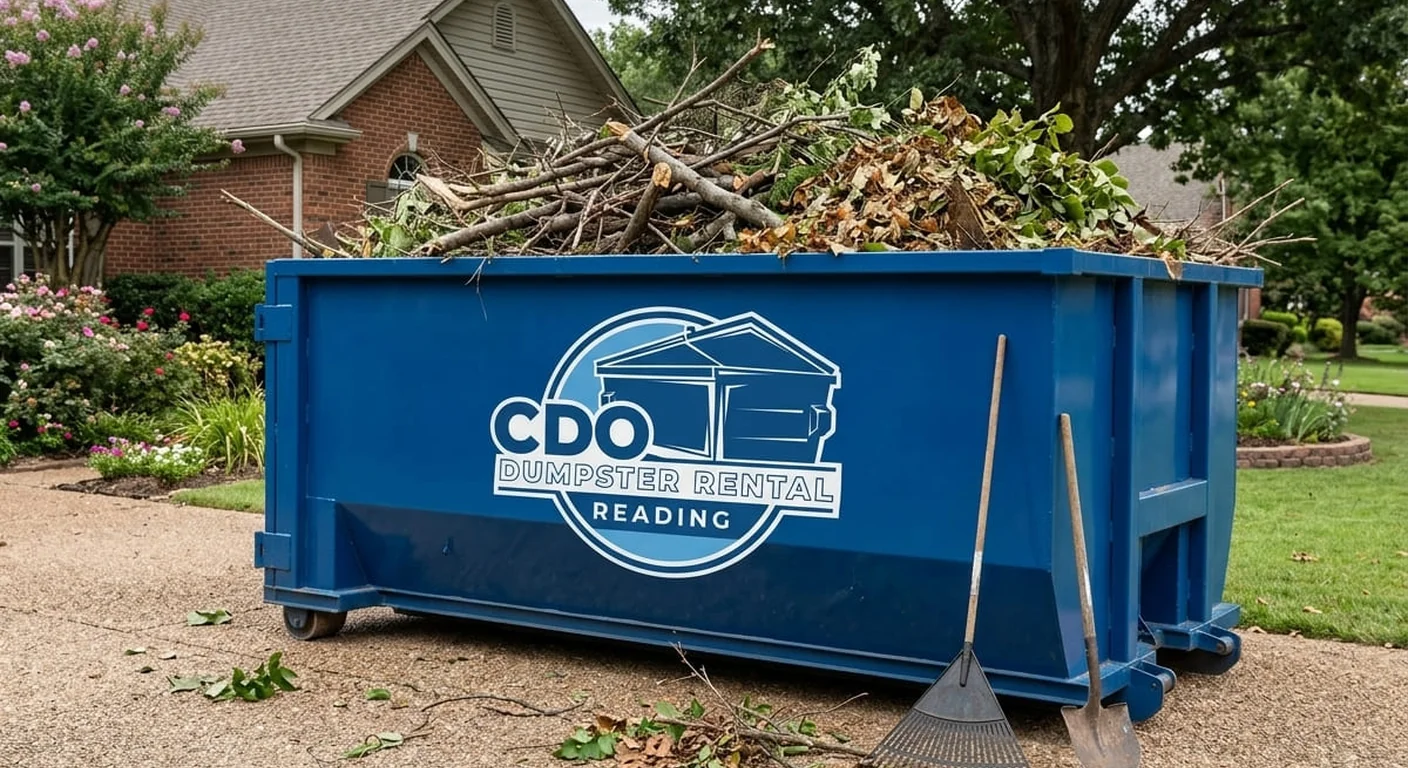
For bigger yard projects — clearing an overgrown lot, taking down storm-damaged trees, or a major landscaping overhaul — our yard waste removal service and dumpster rentals handle branches, brush, and clippings in volume that composting or a municipal program isn't built for. We cover this seasonal side of things in more depth in our Pennsylvania seasonal cleanup guide.
Construction and Demolition Debris: Recycling Beyond the Landfill
A lot of what fills our dumpsters on remodel and demolition jobs — clean wood framing, drywall offcuts, asphalt shingles, and especially concrete and masonry — has recycling potential even though it doesn't fit a curbside program. Concrete and masonry can often be crushed and reused as fill or aggregate rather than landfilled outright, and clean, unpainted wood can sometimes be chipped or processed rather than buried. Whether a given load gets recycled or landfilled ultimately depends on the receiving facility, but it's worth knowing the option exists, especially on larger jobs. The U.S. EPA's page on construction and demolition materials is a good primer on how these materials get diverted from landfills at a national level, and it's useful background if you're planning a larger renovation, teardown, or new-build project in Reading or anywhere else in Berks County. If your project involves concrete, masonry, or other heavy debris specifically, our concrete and heavy debris and demolition debris pages go into more detail on how we handle those loads.
PA DEP's Role and Berks County's Own Resources
Pennsylvania's solid waste and recycling framework runs through two levels. Statewide, the Pennsylvania Department of Environmental Protection regulates landfills, recycling programs, and hazardous waste handling, with program details available through its waste programs division. Locally, Berks County and individual municipalities — including the City of Reading — implement the day-to-day programs: curbside recycling schedules, seasonal yard waste collection, and household hazardous waste or electronics collection events. When in doubt about where a specific material goes, Berks County's website is generally the best first stop for current program details, since collection schedules and accepted materials do shift from year to year.
When the Dumpster Is Still the Right Call
None of this replaces a dumpster for what a dumpster is actually good at: wood, drywall, tile, flooring, furniture, household clutter, roofing shingles, yard clippings and branches, and small appliances, all in one container with flat-rate delivery, pickup, and disposal built in. The recycling and hazardous-waste channels above exist for the handful of categories that need a different path — paint and chemicals, electronics, appliances with refrigerant, and bulk scrap metal. Sort those out first, and everything else can go straight into the roll-off.
If you're planning a cleanout, remodel, or estate job anywhere in Reading or greater Berks County and aren't sure how to split the load between a dumpster and a recycling drop-off, call us at (484) 334-4904 and we'll walk through it with you — including sizing the right dumpster for what's actually headed to the landfill. You can also browse our full dumpster size guide or check our service area to confirm we cover your town before you book.
Need a container in Reading or anywhere in Berks County? Call (484) 334-4904 and describe the job. We will name the size, the flat rate and a delivery slot — often the same day. No forms, no waiting on an email.