Cleanouts
Estate Cleanout Checklist
A step-by-step estate cleanout checklist for Reading and Berks County families: sorting keep/donate/dispose, pacing the timeline, and what belongs in a dumpster versus separate handling.
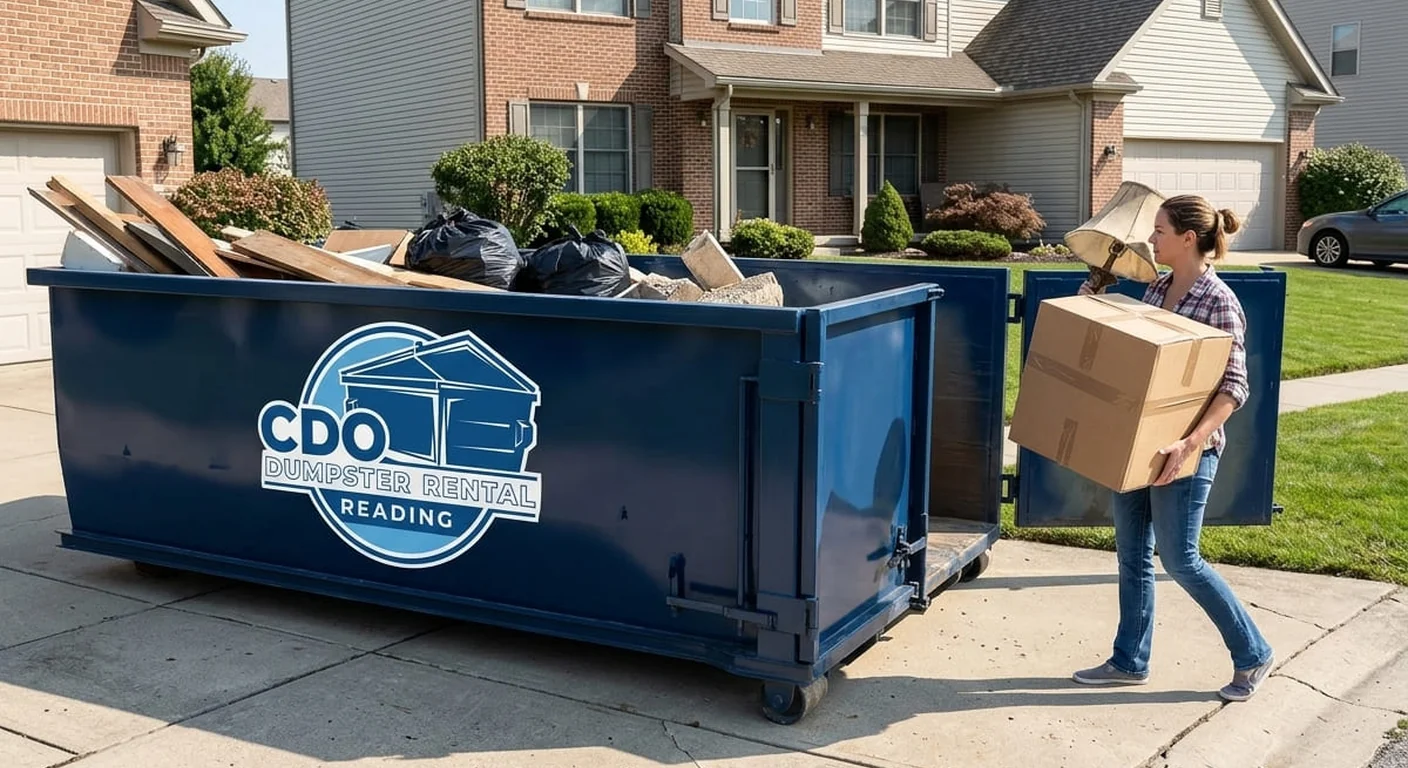
Clearing out a family home is rarely just a logistics project. Whether you're emptying a parent's rowhome in Reading after a passing, prepping a Berks County farmhouse for sale, or helping a relative downsize out of a house they've lived in for forty years, an estate cleanout mixes grief, decision fatigue, and the sheer physical weight of decades of belongings. This checklist is built to make the process manageable — one room, one decision, and one dumpster load at a time.
Start With a Plan, Not a Dumpster
It's tempting to rent the biggest container available and start hauling the day it arrives. Slow down for one afternoon first. Walk the house room by room with a notepad (or your phone) and get a general sense of scope: which rooms are mostly furniture, which are paper and keepsakes, which are the "everything drawer" and attic situations that always take longer than expected. Older homes around Mount Penn, West Reading, and out toward Wernersville or Womelsdorf often have basements, coal cellars, and walk-up attics that hide an entire extra house's worth of belongings — plan extra time for those spaces specifically.
Decide early who's involved, on which days, and who has final say on sentimental items that spark disagreement. A little bit of structure up front prevents the two most common estate cleanout problems: running out of time before a closing date, and family friction over items nobody had actually claimed a stance on.
The Three-Pile System: Keep, Donate, Dispose
Every room in an estate cleanout eventually reduces to three piles. Naming them out loud — literally labeling boxes or corners of a room — keeps the sorting moving and keeps everyone on the same page about what's already been decided.
Keep
Photographs, documents, jewelry, a handful of furniture pieces with real family meaning, anything with sentimental or genuine resale value. Keep this pile intentionally small. It's easy to let "keep" balloon because everything has a memory attached; a good rule is to ask whether a specific person will actually store and use the item, not just feel bad letting it go.
Donate or Sell
Furniture in decent condition, working small appliances, linens, tools, books, and housewares in good shape can usually find a second home before they ever reach a dumpster. National donation networks such as Goodwill or the Salvation Army, along with local churches and thrift shops around Reading and Berks County, often accept these items directly, and some will schedule a pickup for larger furniture pieces if you call ahead. Donating first is also the most respectful way to handle a lifetime of belongings — someone else genuinely gets use out of what your family no longer needs.
Dispose
What's left after keep and donate — broken furniture, worn-out carpet and padding, water-damaged boxes, old mattresses, general household clutter that's simply reached the end of its useful life — is exactly what a roll-off dumpster is for. This is where a dedicated estate cleanout dumpster rental earns its keep: instead of dozens of truck runs to the curb over several weekends, you fill one container on your own schedule and we haul it away in a single trip.
Pace the Job: A Realistic Timeline
Estate cleanouts get overwhelming fastest when families try to do the whole house in a single weekend. A phased approach, spread over one to three weeks depending on the size of the home, tends to hold up much better emotionally and physically than a single exhausting push. The table below is a starting framework — adjust it to your family's real schedule and the size of the property.
| Phase | Typical Timeframe | Focus |
|---|---|---|
| 1. Walkthrough & Plan | Day 1 | Assess scope room by room, identify hazardous materials and valuables, decide on dumpster size and delivery date |
| 2. Keepsakes & Documents | Days 2–3 | Photographs, paperwork, financial records, jewelry — pull these before heavier work begins |
| 3. Donation Sort | Days 3–5 | Stage furniture, housewares, and clothing for donation pickup or drop-off |
| 4. Dumpster Fill | Days 5–10 | Bulk disposal of damaged furniture, clutter, and non-salvageable items into the roll-off |
| 5. Attic, Basement & Garage | Days 8–12 | The slowest phase in most older Berks County homes — budget extra time here |
| 6. Final Sweep & Pickup | Final day | Last walkthrough, confirm the dumpster is below the fill line, schedule pickup |
If your timeline is tighter — an estate sale deadline or a closing date looming — call us at (484) 334-4904 and tell us the date you need the container gone by. We'll size the rental and pickup around your deadline rather than the other way around.
What Goes in the Dumpster vs. What Needs Separate Handling
Most of what comes out of a house during a cleanout — wood furniture, drywall scraps from a repair, old carpet, general household clutter, broken shelving, yard debris from cleaning up the property — is exactly what a roll-off is built for. A few categories, though, need to be pulled aside and handled separately, both for safety and because Pennsylvania regulations don't allow them in a standard container.
| Category | Examples | Where It Goes |
|---|---|---|
| Dumpster-friendly | Furniture, mattresses, household clutter, flooring, drywall, small appliances, yard clippings | Straight into the roll-off, broken down when possible |
| Hazardous materials | Paint, solvents, oils, gasoline, propane tanks or gas cylinders, batteries, medical waste | Never in the dumpster — take to a household hazardous waste collection event |
| Electronics | Old TVs, desktop computers, monitors, printers | Best routed to an e-waste recycler; small appliances like toasters or microwaves are fine in the dumpster |
| Large furniture | Sofas, dressers, bed frames, dining sets | Fits the dumpster, but break down what you can to save space |
Hazardous Materials Need a Separate Path
Half-used cans of paint, old solvents and motor oil, propane tanks, car batteries, and medical waste are common finds in Berks County basements and garages, especially in homes that have been lived in for decades. None of these can go in a roll-off dumpster. Check with Pennsylvania DEP's waste programs or Berks County for household hazardous waste collection events, which typically run on a scheduled basis rather than year-round drop-off.
Electronics Deserve a Second Look
Old televisions, desktop computers, and monitors often contain components that shouldn't be landfilled and are increasingly handled through dedicated e-waste recycling rather than general disposal. Small kitchen appliances are generally fine for the dumpster, but for larger electronics it's worth a quick search for an e-waste recycler near Reading before disposal day — many accept these items at no cost.
Large Furniture: Break It Down First
Sofas, dressers, bed frames, and dining sets are all acceptable in the dumpster, but they eat space fast when left whole. Disassembling what you can — removing legs, splitting apart sectional pieces, flattening dressers — lets you fit meaningfully more into the same container, which matters most in a full estate cleanout where every cubic foot counts.
Sizing the Dumpster for an Estate Cleanout
Estate cleanouts almost always run bigger than families expect, because a house holds more than any single room suggests. For a typical single-family home, a 20-yard dumpster handles a moderate cleanout with furniture and general clutter, while a full house — especially an older property with a basement and attic both packed with decades of belongings — often calls for a 30-yard dumpster. If you're not sure, describe the home to us over the phone at (484) 334-4904 and we'll help you land on the right size before delivery, rather than swapping containers mid-project. Our full dumpster size guide breaks down all five sizes we carry — 10, 15, 20, 30 and 40 yard — with typical uses for each.
Every rental runs on our standard 7-day period, which is usually enough for a phased cleanout, and extensions are available if you call ahead and the schedule allows it. Pricing is flat-rate — one number covers delivery, pickup, and disposal, with no surprise fees added after the fact.
Permits and Placement
If the dumpster sits in a driveway or on the estate's own property, no permit is needed. If there's no room on-site and it has to sit on the street — common on some of Reading's narrower rowhome blocks — a temporary placement permit may be required. Confirm with the City of Reading or your local borough or township office before delivery day. Our guide to dumpster permits in Reading, PA covers the details for the city and surrounding municipalities.
Older Berks County Homes: What to Expect
Homes climbing the hillside streets of Mount Penn or tucked into Reading's older neighborhoods often have layouts built decades before modern storage habits — narrow basements, walk-up attics, and outbuildings that all quietly accumulated their own share of belongings over a lifetime. Out in the county, older stone farmhouses and barns around towns like Womelsdorf, Robesonia, or Kutztown can hide entire outbuildings' worth of tools, equipment, and stored furniture that never made it into the main sorting effort. Give these spaces real time in your plan rather than treating them as an afterthought on the last day.
Winter and early spring cleanouts add one more wrinkle here: driveways and walkways can be icy or soft with thaw, which affects both foot traffic moving items and where a delivery truck can safely place a container. If your cleanout falls in the colder months, mention that when you call so we can talk through placement.
When Junk Removal Makes More Sense
Not every cleanout needs a dumpster sitting on-site for a week. If the volume is smaller, or if the family isn't able to do the physical sorting and hauling themselves, our junk removal service is worth a look — we come in, load it, and haul it away in one visit. For larger, multi-week projects with ongoing sorting, a dumpster rental generally works out more practical. If you're weighing the two, our whole-home cleanout weekend plan walks through both approaches side by side.
Getting Started
An estate cleanout is heavy work, physically and otherwise. Breaking it into the phases above — plan, sort, donate, fill, and finish — keeps it from becoming one overwhelming task and gives your family a clear sense of progress along the way. When you're ready to bring in a dumpster, call (484) 334-4904 and tell us about the property: size, access, and your timeline. We'll help you pick the right size, get it delivered on your schedule, and take it away as soon as the work is done — one flat rate, no hidden fees, covering delivery, pickup, and disposal. You can also check our full service area to confirm we cover the property's location, or browse our FAQ page for more on how rentals work before you call.
Need a container in Reading or anywhere in Berks County? Call (484) 334-4904 and describe the job. We will name the size, the flat rate and a delivery slot — often the same day. No forms, no waiting on an email.